

Wildfire Basics: Understanding Fire in the Inland Northwest
Written by: Kylee Monroe, Landscape Designer
Every summer, it seems like wildfire season returns to the Inland Northwest. Smoke fills the sky, evacuation notices make the news, and many of us wonder the same thing: why does this keep happening?
It can be tempting to think wildfires are purely the result of carelessness or bad luck, but the story is much more complex. Before studying landscape architecture, I didn't fully understand this myself, and I suspect many people in our region have never been taught much about fire science or wildfire history. Fire has always been a natural part of many landscapes throughout the West. Long before roads, neighborhoods, and cities existed, wildfires helped shape forests, grasslands, and shrub-steppe ecosystems.
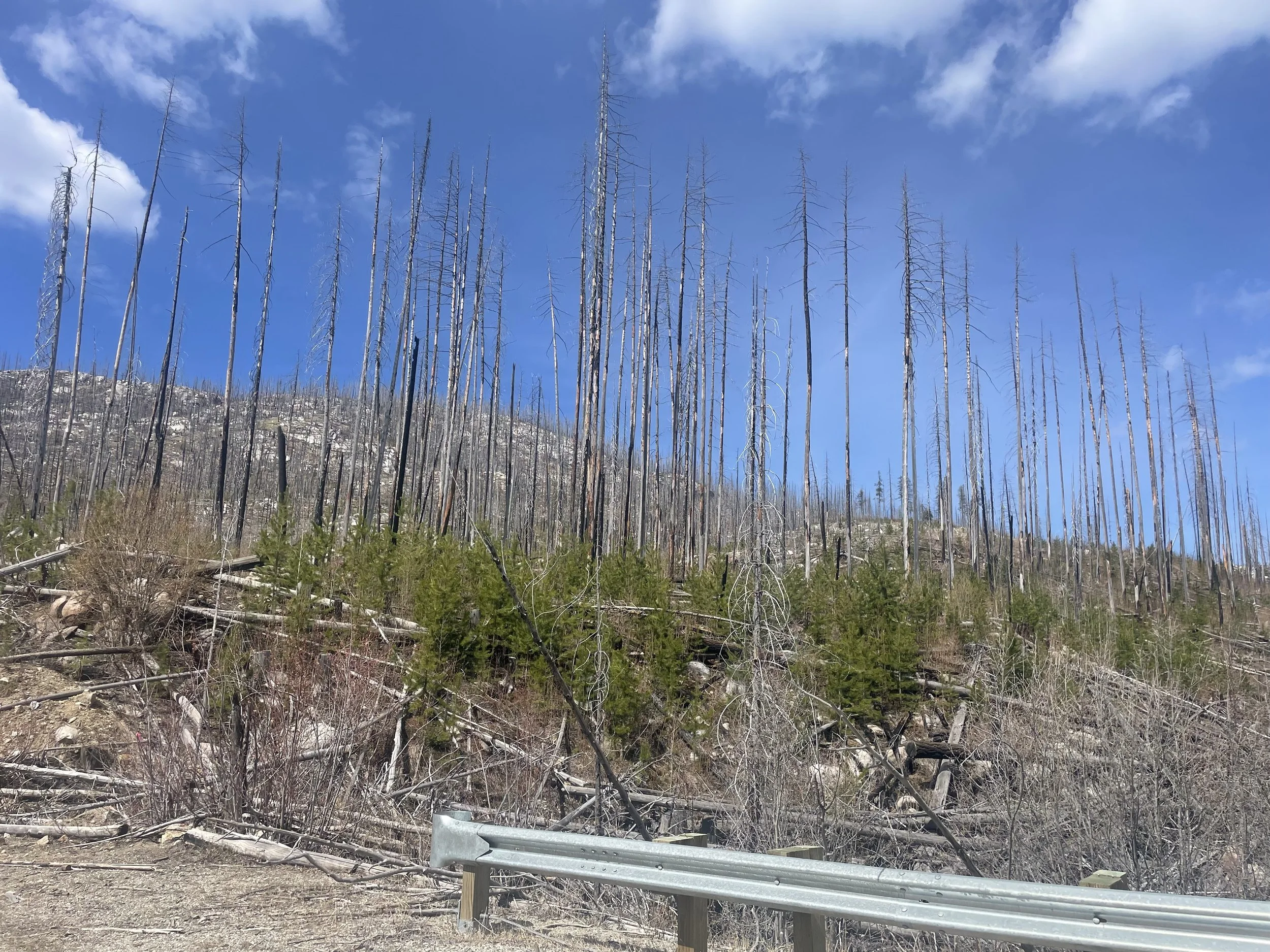
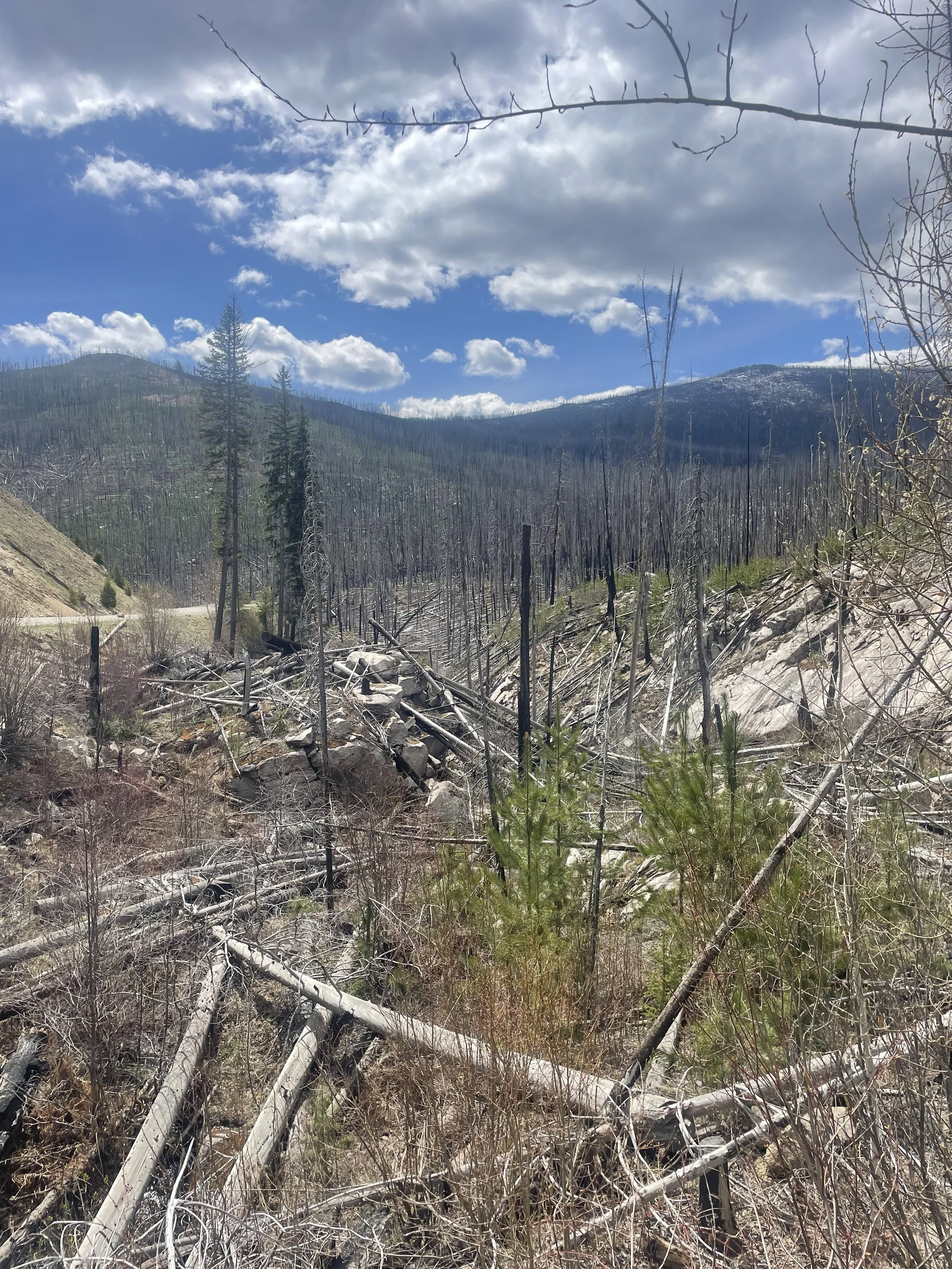
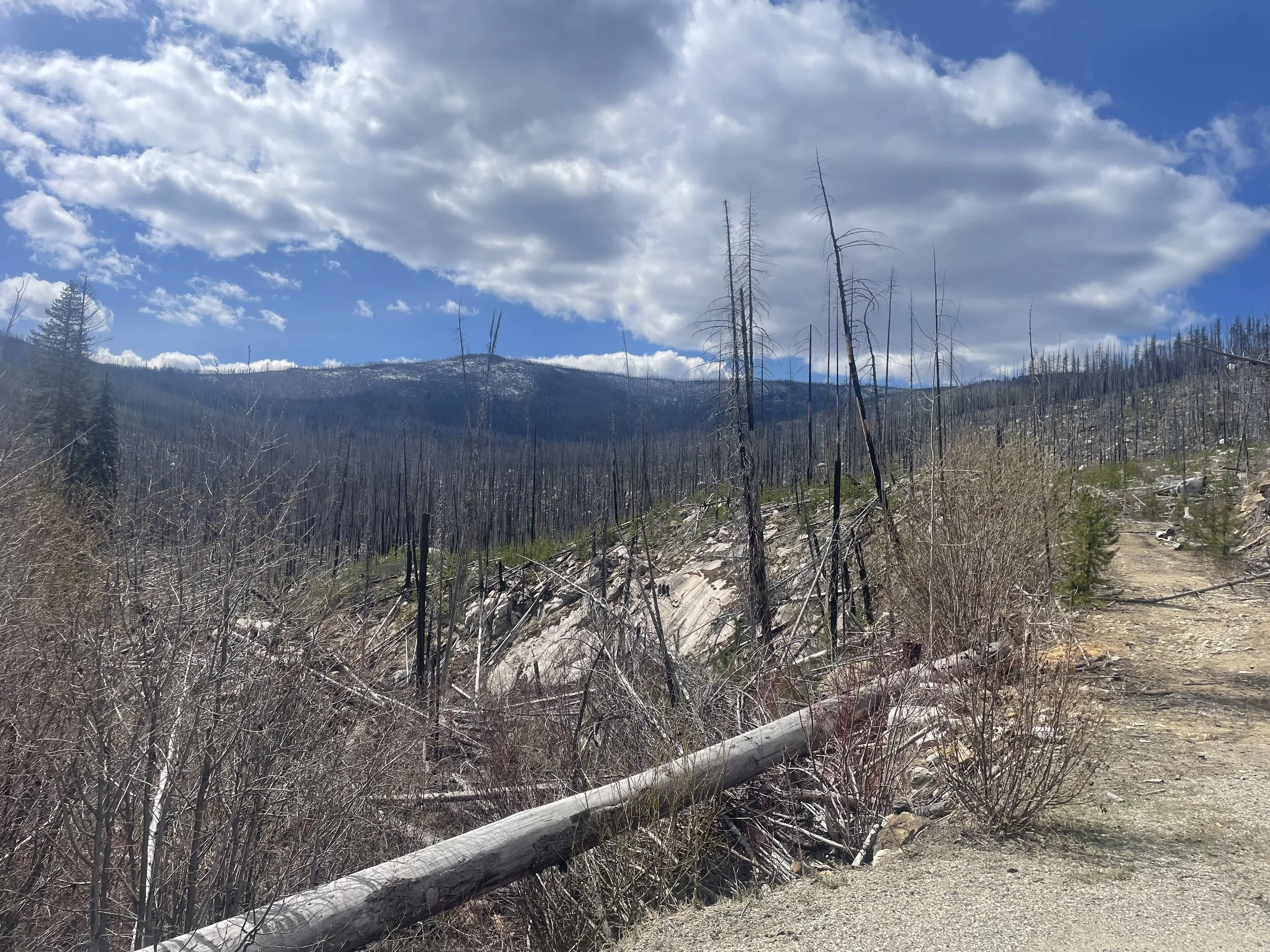
The challenge today is that more people live, work, and recreate in areas where fire naturally occurs. At the same time, decades of fire suppression have altered many landscapes, allowing vegetation to accumulate in ways that can increase wildfire intensity. The result is a complicated relationship between people, fire, and the environment.
Understanding a few basic wildfire concepts can help make sense of what we see each summer and provide context for future conversations about defensible space, community planning, and wildfire resilience.
The Three Ingredients of Fire
Every fire requires three ingredients:
Fuel
Oxygen
Ignition
This is often called the "Fire Triangle."
Fuel includes anything that can burn, such as grasses, pine needles, shrubs, fallen branches, or trees. Oxygen is readily available in the atmosphere, and ignition can come from many sources including lightning, equipment, campfires, power lines, or debris burns.
When all three ingredients are present, fire can start and continue to spread.
Why Do Some Areas Burn More Frequently?
Not all landscapes burn the same way or at the same frequency.
The rolling grasslands around Cheney and Medical Lake behave very differently than the dense forests on Mount Spokane. Different plant communities produce different amounts and types of fuel, which affects how often fire naturally occurs and how it behaves when it does.
Scientists refer to these patterns as fire regimes. A fire regime describes how often fires occur, how intense they typically are, and how they influence the surrounding ecosystem over time.
For example:
Grasslands often experience more frequent fires because fine fuels such as grasses dry quickly and ignite easily.
Forested landscapes may burn less frequently but can produce larger and more intense fires when fuel accumulates.
Topography, weather, and human activity further influence how fire behaves across these different environments.
How Do Wildfires Start?
Wildfires can begin from both natural and human-caused sources.
In Eastern Washington, lightning can ignite fires during summer storms. Human activities can also spark fires through debris burning, equipment use, vehicle-related sparks, abandoned campfires, discarded cigarettes, or intentional acts.
Regardless of the source, once ignition occurs, a fire's behavior is determined by weather conditions, fuel availability, and terrain.
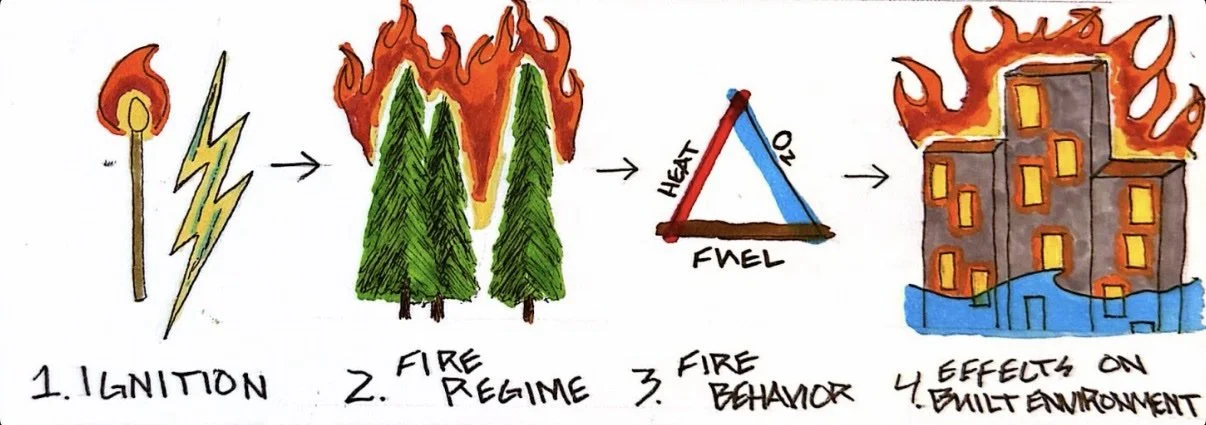
Aiden Myers, Fire Behavior, 2026, Courtesy of the artist.
How Fire Spreads
Wildfire generally spreads in three primary ways.
Surface Fire
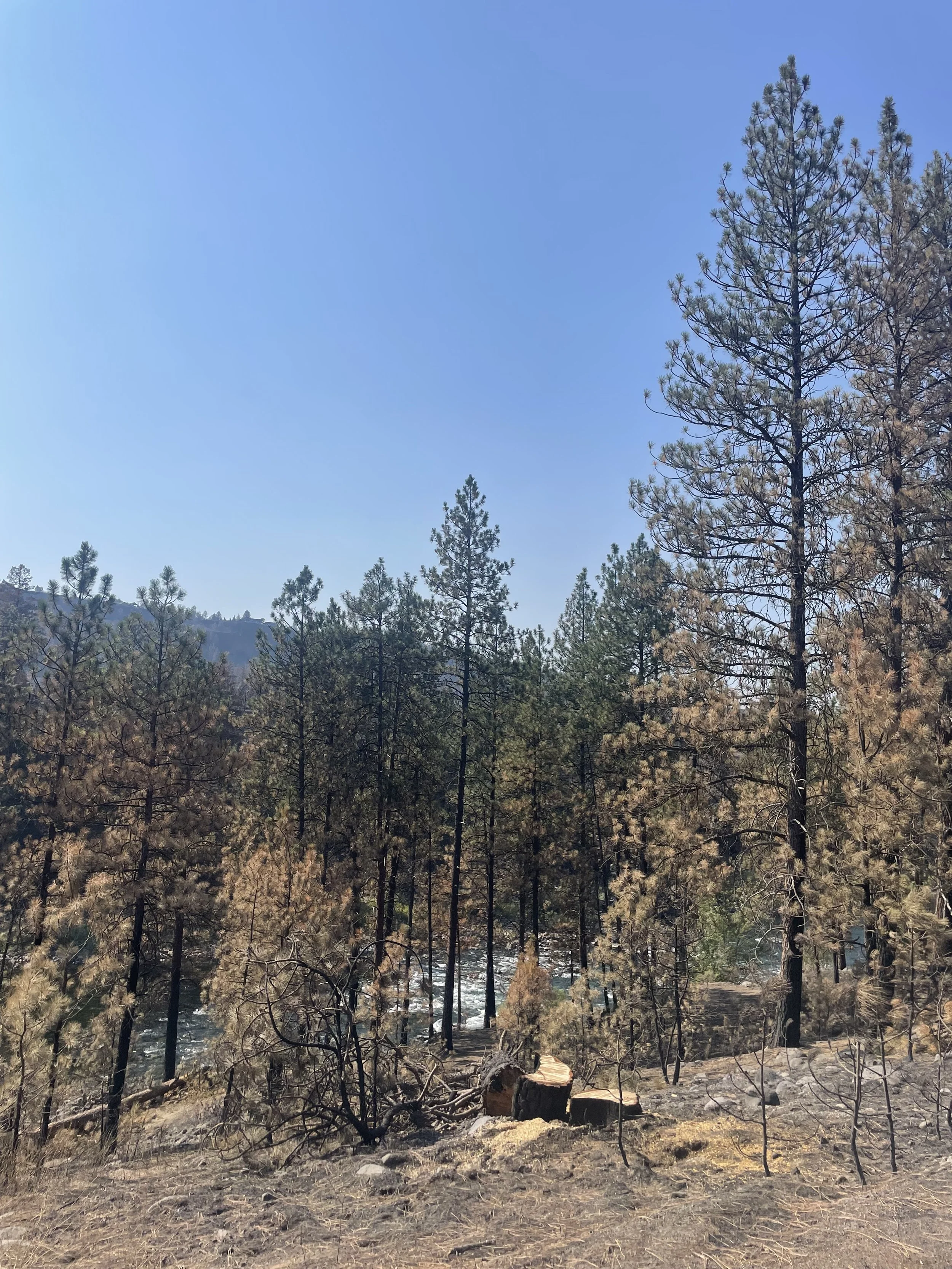
Surface fires burn through grasses, leaves, pine needles, and low vegetation along the ground.
These fires are often the most common type and can range from beneficial ecological burns to rapidly moving wildfire events under dry and windy conditions.
Crown Fire
Crown fires spread through the tops, or canopies, of trees.
These fires can move quickly through forested landscapes and are often associated with the large, dramatic wildfires seen on television and in news coverage.
Ladder Fuels: Connecting the Ground to the Trees
Not all fires begin in the treetops.
Often, a fire starts as a surface fire and moves upward through what are known as ladder fuels. These include shrubs, low tree branches, young trees, or accumulated vegetation that allow flames to climb from the ground into the forest canopy.
Once fire reaches the canopy, it can transition into a crown fire and become much more difficult to control.
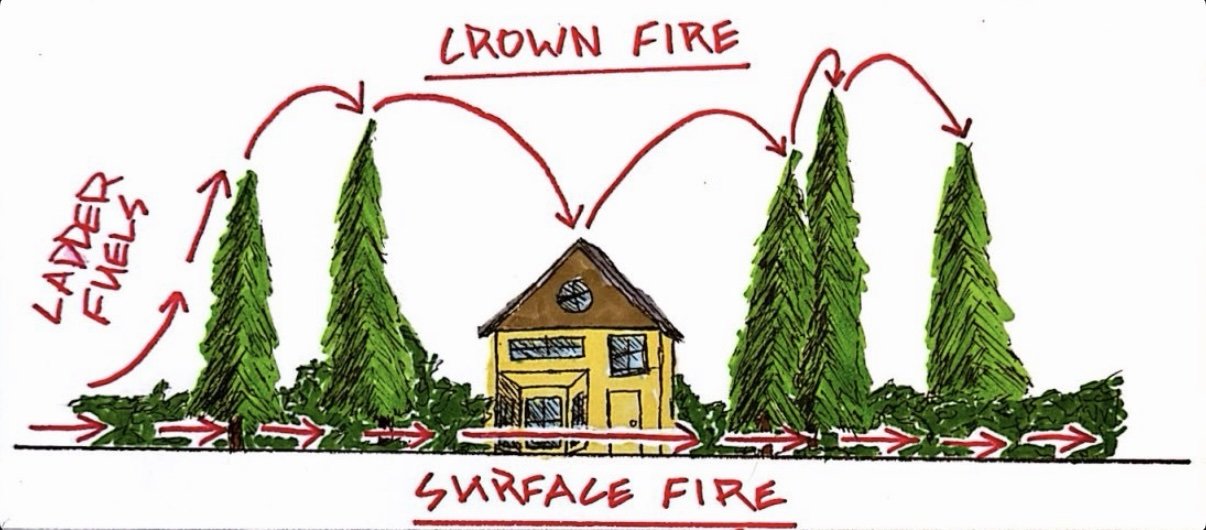
Aiden Myers, Types of Fire, 2026, Courtesy of the artist.
Why Understanding Fire Matters
Wildfire is neither entirely bad nor entirely good. It is a natural process that has shaped Inland Northwest landscapes.
The challenge facing communities today is learning how to live more safely alongside fire while protecting homes, infrastructure, and natural resources.
Understanding fuel, ignition sources, fire regimes, and fire behavior provides the foundation for that conversation. In future articles, we'll look at how homeowners, neighborhoods, and community planners can use these principles to create more wildfire-resilient landscapes.
I am a Landscape Architect in Training based in Spokane, Washington. My master's research focused on Wildfire Defensible Design Strategies for the Silver Valley Communities of Kellogg, Wardner, Smelterville, and similar Idaho corridors threatened by wildfire. Through this work, I explored how planning, comprehensive plans, community goals, and local aspirations can be leveraged to improve resilience in wildfire-prone communities. Today, I continue to pursue strategies that protect and strengthen Inland Northwest communities through thoughtful landscape architecture, green infrastructure, and resilient design.